

Building a measurable workplace safety culture requires active leadership commitment, open communication channels, and the tracking of both leading and lagging indicators. Success is achieved by empowering employees to report hazards without fear of retribution and consistently monitoring metrics such as incident rates and training completion.
Most organizations display safety slogans on breakroom walls, yet they struggle with stagnant incident rates and disengaged frontline teams. This disconnect occurs because a values statement is not a strategy; it is merely a sentiment. Without quantifiable metrics, safety culture remains an abstract concept that is impossible to scale, manage, or improve. To move beyond performative compliance, leadership must anchor their cultural goals in rigorous frameworks and real-time data. This guide provides a practical roadmap for building a high-maturity safety environment. You will learn how to leverage ISO 45001 standards as a catalyst for change, implement blame-free reporting systems, and extend safety protocols to remote workforces. Finally, we will demonstrate how to synthesize these elements into a digital safety dashboard that transforms qualitative culture into measurable business performance.
The Difference Between a Safety Slogan and a Workplace Safety Culture
A "Safety First" banner hanging in a breakroom is often the visual representative of a values statement, but it rarely influences behavior during a production crunch. In professional environments, the true health and safety culture meaning is found in the shared behaviors, habits, and values that dictate how your team interacts with risk when supervisors are absent. It is the collective choice to follow a lockout-tagout procedure even when it adds ten minutes to a shift, or the willingness of a junior technician to pause a job when they spot a hazard.
At Safety Compass AI, our Nashville-based team views culture not as an independent initiative, but as the inevitable byproduct of a well-designed ISO 45001 safety system. While slogans are passive, a structural safety mechanism is active. It moves safety from a checklist of rules to a fundamental part of the operational workflow. When organizations move away from reactive, poster-based safety and toward a structured ISO 45001 methodology, they provide their employees with the tools to take ownership of their environment.
True workplace safety culture requires more than just intent; it requires an infrastructure that makes safe behavior the path of least resistance. By utilizing a specialized digital safety platform to organize these mechanisms, companies can shift from demanding compliance to fostering proactive safety ethics. In this framework, safety is not something extra that employees do at the end of the day; it is simply the way the business functions.
Why Most Companies Fail to Measure Safety Culture Success
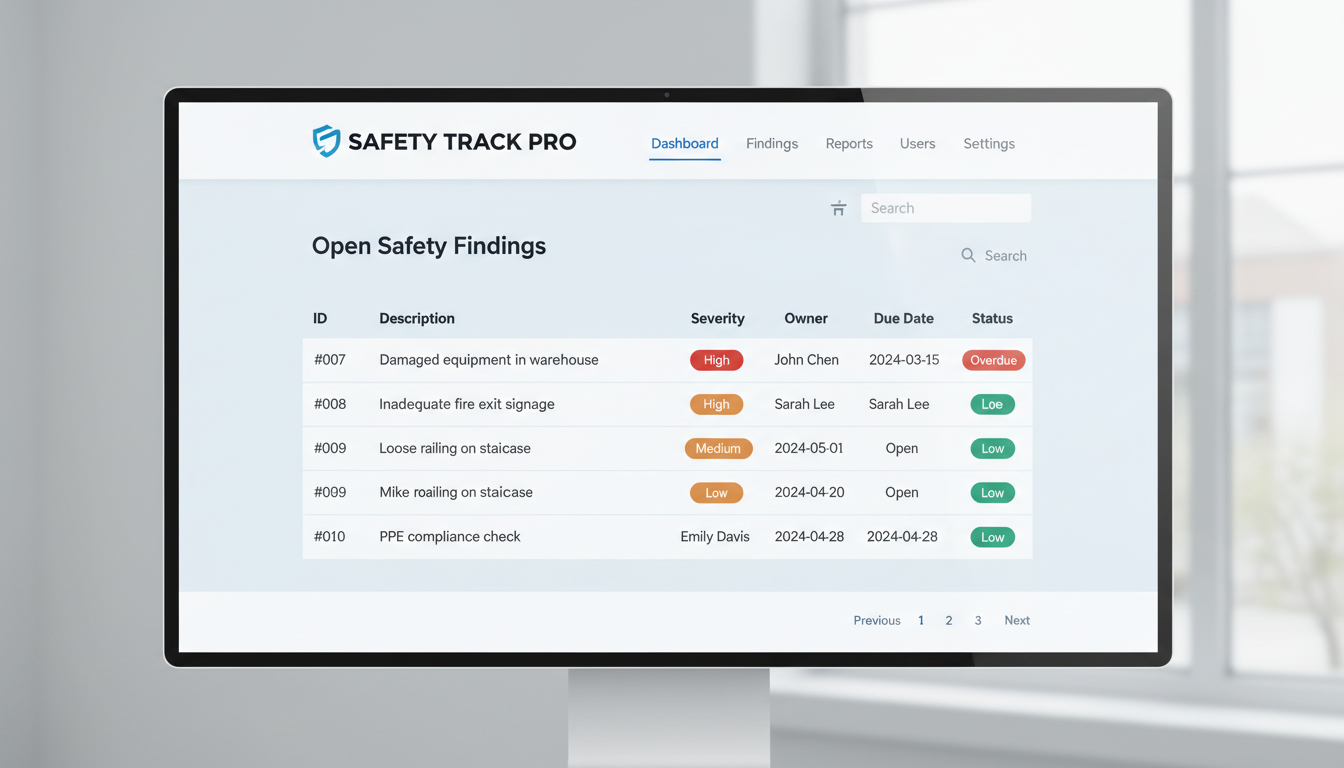
A reliance on lagging indicators like Total Recordable Incident Rate (TRIR) tells you how many people were hurt last month, but it offers no insight into how many will be hurt tomorrow. These metrics are inherently reactive. When a company celebrates a high number of days since the last accident, it often inadvertently incentivizes the suppression of reports. Employees may hesitate to report a minor strain or a equipment malfunction because they do not want to be the ones to break a streak or trigger a corporate audit. In this environment, a low incident rate masks a high-risk culture.
Measuring a true workplace safety culture requires a shift toward leading indicators. These are proactive metrics that track the health of your ISO 45001 safety system in real time. Organizations that successfully bridge the gap between compliance and performance focus on three primary data points:
Participation Depth: The percentage of the workforce actively contributing to safety meetings or hazard identifications rather than just attending them.
Resolution Velocity: The average time it takes for a reported hazard to be mitigated through corrective actions.
Reporting Ratios: A healthy ratio of near-miss reports to actual injuries, which indicates that the team feels safe enough to be transparent about close calls.
This transition from counting bodies to measuring engagement defines the evolution of workplace safety culture and ethics. A compliance-only mindset views safety as a hurdle to overcome or a cost to minimize. Conversely, a proactive ethics approach treats safety as a core operational value. By utilizing a digital safety platform to track these leading indicators, Nashville leaders can move beyond the "zero accidents" myth and start managing the actual behaviors that prevent those accidents from occurring. This structural transparency ensures that safety is not just an absence of injury, but the presence of capacity.
The ISO 45001 Framework as a Culture Catalyst
Transitioning from measuring leading indicators to achieving them requires a structural framework. The ISO 45001 safety system serves as the operational skeleton for a resilient culture, providing the necessary boundaries and supports for behavior to evolve. Specifically, Clause 5, which governs Leadership and Worker Participation, dismantles the traditional top-down command structure. It mandates that employees are not merely informed of safety protocols but are actively consulted during their development and implementation.
This structural shift answers a fundamental question often asked by organizational leaders: in a company with a good safety culture, who is responsible for finding and addressing hazards? The ISO 45001 methodology dictates that responsibility is universal but must be supported by leadership. By formalizing worker participation, the framework moves employees from being passive observers of rules to active safety owners. They become the primary sensors for risk in the environment, utilizing their unique subject matter expertise to identify hazards that a supervisor might miss during a monthly walkthrough.
In Nashville's rapidly scaling industrial and tech sectors, keeping these participation channels open requires more than an open-door policy. Local consultants and startups utilize a specialized digital safety platform to capture these frontline insights in real time. When a technician can report a hazard via a mobile interface and see it move through a transparent resolution workflow, the abstract concept of "participation" becomes a tangible reality. This systematic approach ensures that worker input is not just a suggestion, but a core component of the organization’s continuous improvement cycle.
Five Indicators of a Strong and Mature Safety Culture

A mature workplace safety culture is not a static achievement but a specific point on a spectrum of organizational maturity. Most companies evolve through five distinct levels. At the Pathological level, safety is viewed as a nuisance or a compliance burden to be bypassed. This moves into the Reactive stage, where safety only becomes a priority after an injury occurs. The Calculative level introduces formal rules and bureaucratic systems, while the Proactive stage sees leadership actively seeking to improve safety before incidents occur. The final stage, the Generative level, represents a culture where safety is not a separate initiative; it is the fundamental way the organization does business.
To identify if an organization is ascending toward this Generative state, five key indicators serve as benchmarks for a strong safety culture:
Blame-Free Reporting: In a mature culture, a near-miss report is treated as a vital piece of data rather than a confession of failure. The focus remains on identifying system flaws rather than punishing human error.
Integration of Psychosocial Health: A sophisticated ISO 45001 safety system recognizes that mental health, workplace stress, and burnout are legitimate safety hazards. Mature cultures manage these psychosocial risks with the same rigor as physical fall protection.
Universal Behavioral Standards: Leadership adheres to the same safety protocols as the frontline workers. There are no "executive exceptions" for PPE or site safety rules, reinforcing that safety is a value, not just a rule for subordinates.
Operational Transparency: Workers have immediate access to a digital safety platform to see the status of their reported hazards. This transparency builds trust, showing that their input results in tangible change.
Stop-Work Authority: Every employee, regardless of tenure, has the genuine authority and psychological safety to pause a job if they perceive a hazard, without fear of production-based reprisal.
Moving from a Pathological mindset to a Generative one requires more than intent; it requires these structural indicators to be embedded into the daily workflow. When psychosocial well-being and blame-free transparency become the norm, the organization stops managing safety and starts leading people.
Implementing Blame-Free Reporting and Incident Investigations
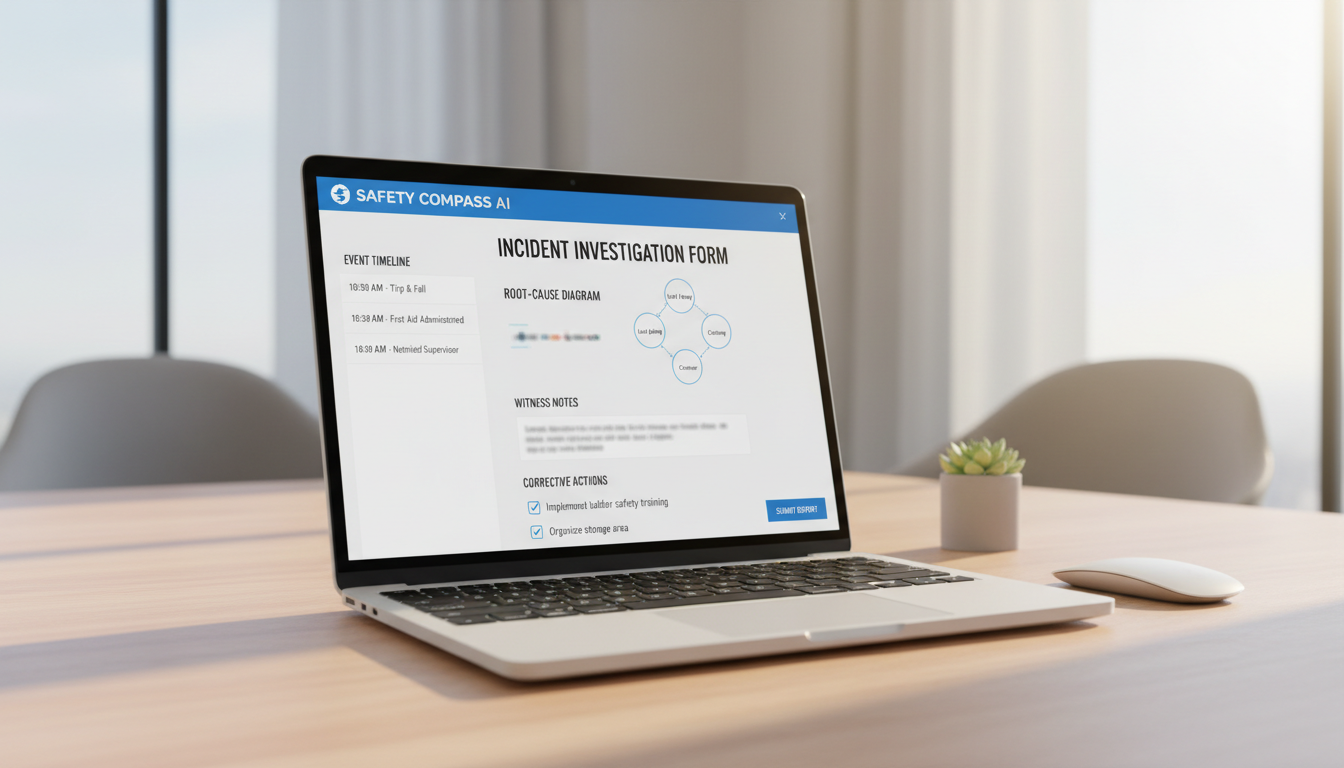
Building a generative workplace safety culture requires a fundamental shift in how your organization handles negative information. If a worker reports a near miss and is met with a disciplinary write-up, the reporting system effectively dies that day. To foster authentic workplace safety culture and ethics, leadership must decouple reporting from punishment. This begins by implementing a digital safety platform that simplifies the process, allowing workers to log hazards or incidents from their mobile devices immediately. When the barrier to reporting is low and the fear of reprisal is removed, you gain access to the raw data needed to prevent the next major injury.
Effective incident investigations must focus on system deficiencies rather than individual culpability. When conducting a root-cause analysis within an ISO 45001 safety system, the goal is to identify the latent conditions that allowed a mistake to occur. Follow this structured approach to ensure your investigations remain objective:
Define the Incident: Gather objective facts without assigning labels like "carelessness" or "negligence."
Analyze the System: Use the "Five Whys" technique to move past the person. If a technician bypassed a guard, ask why the guard was inconvenient or why the production schedule necessitated the shortcut.
Identify Structural Gaps: Determine if the failure originated in inadequate training, poor equipment design, or conflicting operational priorities.
Implement Corrective Actions: Design a solution based on ISO 45001 methodology that makes the error impossible or significantly less likely to recur.
By treating every incident as a systemic data point, Nashville organizations can move from blaming people to fixing the environments they work in, reinforcing trust across every level of the company.
Extending Safety Culture to the Office and Remote Workers
A resilient workplace safety culture does not stop at the warehouse door or the construction site gate. For Nashville’s expanding tech and healthcare headquarters, the primary risks shift from heavy machinery to the "silent" hazards of the modern professional environment. These include chronic ergonomic strain, psychosocial stressors like burnout, and digital security failures. When an organization utilizes an ISO 45001 methodology, it acknowledges that mental health and sedentary risks are as critical to operational continuity as physical fall protection.
Safety messages for office workers often fail because they lack the structural weight of field protocols. To bridge this gap, leaders should implement specialized standards for both remote and office-based teams:
Safety Category | Office Focus Area | Remote Focus Area |
|---|---|---|
Ergonomics | Adjustable workstations and monitor height | Home office assessment checklists |
Psychosocial | Burnout prevention and workload balance | Social isolation and clear boundaries |
Digital | Secure physical access to data rooms | Encrypted connections and phishing awareness |
By integrating these professional risks into a digital safety platform, companies ensure that safety remains a universal value. This approach prevents a "two-tier" culture where office workers feel excluded from the ISO 45001 safety system provided to their field-based colleagues. When a remote software engineer can report a psychosocial hazard with the same ease as a technician reporting a trip hazard, the culture becomes truly enterprise-wide.
Turning Data into Culture: The Role of the Digital Safety Dashboard
A high performing workplace safety culture requires high fidelity visibility. When safety data is siloed in paper files or static spreadsheets, it remains invisible to the people who need it most. A centralized digital safety platform transforms these latent data points into a real time narrative of organizational health. By visualizing engagement metrics, leaders can move past the limitations of lagging indicators and begin managing the behaviors that actually drive outcomes.
Centralized dashboards allow for the gamification of proactive safety. Instead of a dashboard dominated by red icons representing injuries or non-conformities, a mature ISO 45001 safety system highlights the "green" status of completed audits, hazard hunts, and training sessions. This shift in focus provides immediate positive reinforcement. When a team sees their proactive efforts reflected in a rising engagement score, it validates their participation and maintains the momentum necessary for a generative culture.
For Nashville organizations using an ISO 45001 methodology, these dashboards serve as the objective proof of leadership commitment. It is no longer enough to claim that safety is a priority; the data must show it. Real time tracking of resolution velocity and worker consultation rates provides the structural transparency required to turn a values statement into a measurable, lived experience.
A truly measurable safety culture requires moving beyond slogans and into the realm of data-driven action. By focusing on concrete metrics and team engagement, you can transform safety from a passive value into an active operational strength. If you want expert help implementing these strategies, the team at Safety Compass AI is here to support you. We invite you to explore our Guide to see how professional insights can streamline your journey toward a safer, more predictable workplace for everyone.